SEO best practices 2026: how to stay visible on Google and in AI search
Author: Mariliis Uibomäe · Published: · Last updated:
In brief
Good SEO starts with search intent: each page should clearly answer one question in the format Google already shows for it. Content should reflect real experience, and the technical basics such as titles, canonical tags, sitemap and speed must be in place. In AI search, short clear answers and up to date facts help. The fastest results often come from improving existing pages rather than publishing new ones.
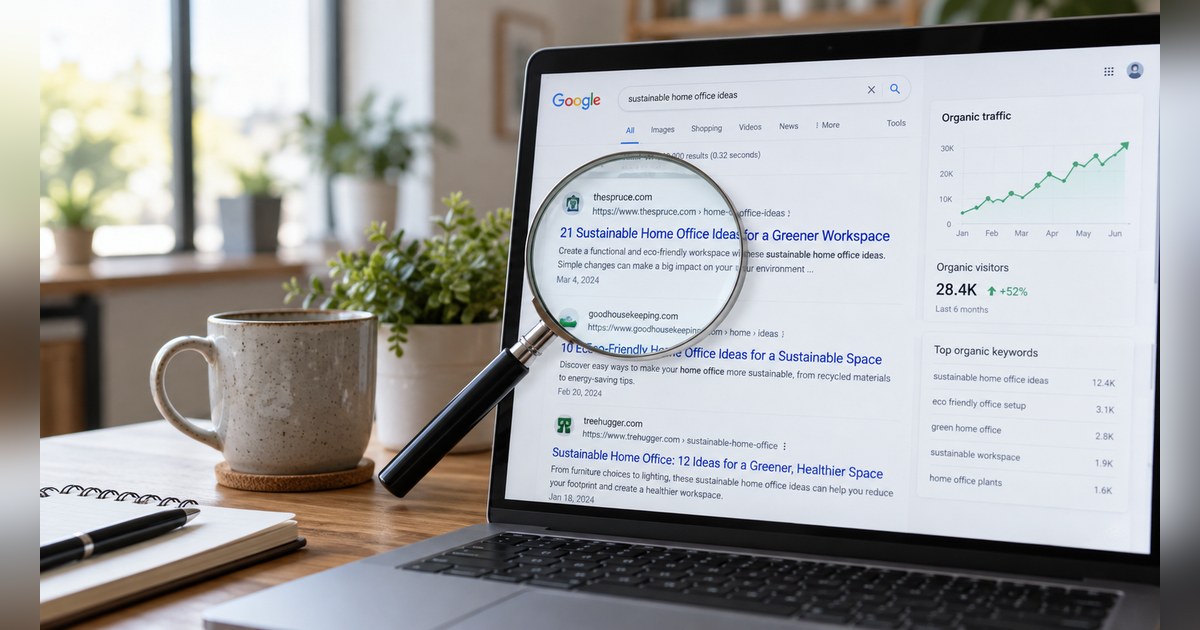
SEO no longer just means ten blue links. Google shows AI Overviews on nearly half of searches, and users increasingly ask ChatGPT, Gemini and Perplexity as well. Below are the principles that actually work in practice, the ones I use to build clients' content and technical setup.
1. Start with search intent, not keywords
Every page should answer one clear question. Check what type of content Google currently shows for that query: a product page, a comparison, a guide or a list. If your format differs from all the results, even the best writing won't help.
- One page, one topic and one primary keyword
- Answer the main question in the first paragraph, only then explain the background
- Cover related sub-questions that people actually ask
2. Content that shows real experience
Google values the E-E-A-T principle: experience, expertise, authoritativeness and trustworthiness. In practice this means being specific.
- Use your own numbers, examples and case studies, not generic claims
- Add an author, their background and contact details
- Update old articles instead of constantly producing new, shallow ones
- Avoid content that is simply AI-generated and unreviewed
3. Technical SEO that must be in place
- Every page needs a unique title of up to 60 characters and a description of up to 160 characters
- One H1 per page with a logical H2 and H3 hierarchy
- A canonical link, a correct sitemap.xml and robots.txt
- Structured data: Organization, Article, Product or Breadcrumb
- Speed and Core Web Vitals, especially on mobile
- Internal links between topics, so important pages gain weight
4. Visibility in AI search, or GEO
AI models cite content that is easy for machines to read and verify.
- Write short, clear answers right after the subheading
- Use tables and lists that are easy to cite
- Keep facts, prices and dates accurate and up to date
- Build brand mentions elsewhere on the web, since AI answers also rely on third-party sources
5. Measure the right things
Ranking position alone no longer tells you much. Track clicks and impressions per page in Search Console, organic traffic conversions in GA4, and separately how many visits come referred from AI tools.
Where to start
Start with an audit: map existing pages, their search intent and technical errors. In most cases, the fastest results come not from new content, but from cleaning up existing pages and improving internal linking.
Frequently asked questions
Where should I start with SEO?
Start with an audit: map your existing pages, their search intent and technical issues. The fastest results usually come from improving existing pages and internal linking.
What is E-E-A-T and why does it matter?
E-E-A-T stands for experience, expertise, authoritativeness and trustworthiness. In practice it means concrete numbers, examples, author information and regularly updated content.
What is GEO?
GEO, or AI search optimisation, helps your content appear in answers from ChatGPT, Gemini, Perplexity and Google AI Overviews. Write short clear answers, use lists and tables, and keep facts up to date.
How should I measure SEO results?
Track clicks and impressions per page in Search Console, organic conversions in GA4, and visits referred by AI tools separately. Rankings alone no longer tell you much.
Ready to get started?
Need a clear marketing strategy or help with a specific channel? I'll work with you to craft a solution that actually delivers results.
Get in touch